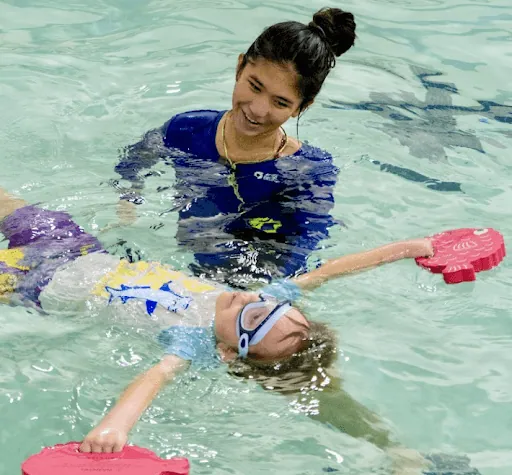
A guide for Toronto parents: what Seal Swimming's Swim Teacher Pro course covers, the prerequisites, how to tell if your teen is ready, and where it leads.
If your teenager has finished their swim levels and started asking about a summer job, a swim teacher course is worth a look. It is a professional qualification rather than another swimming level, and it leads to paid work at pools that hire swim teachers every session across Toronto and the GTA.
The appeal is easy to see. Teaching swimming tends to pay better than many first jobs open to a 15-year-old, the shifts fit around school, and demand across North York, Scarborough and the rest of the GTA is steady year round. There is also a less obvious benefit: teaching a nervous six-year-old to float builds patience, communication and composure that carry into everything your teen does next.
Below is what our Swim Teacher Pro course covers, what your teen needs before they enrol, how to judge whether they are ready, and what the certification opens up afterward.
What is Swim Teacher Pro?
A swim teacher course trains your teen to plan and lead swimming lessons. The swimming part is assumed going in; the course itself is about teaching.
Swim Teacher Pro is Seal Swimming's own swim teacher course, developed by our team to prepare swim teachers to deliver safe, engaging lessons across every Seal Swimming program, from Baby Seal and Seal Pups through Swim Stars 1 to 9 and adult lessons. It is 40 hours over six days, and it follows one learning cycle from start to finish: learn, practise, reflect, improve, teach.
What your teen learns
Swim Teacher Pro covers far more ground than most parents expect. Over the six days, candidates work through:
Becoming a professional swim teacher, and the values that shape every Seal lesson
Swimmer safety: safeguarding, duty of care, safe supervision and risk assessment
Child development, learning through play and building confidence in the water
Communicating with swimmers and parents, including handling the questions parents ask most
Teaching different learners, including anxious swimmers
Stroke analysis, skill progressions, demonstrations and giving feedback a seven-year-old can actually use
Delivering the Seal curriculum for adults, Swim Stars, Baby Seal and Seal Pups, plus running a SplashCheck
Candidates receive the Swim Teacher Pro Manual, a video skill library, lesson-planning templates and the evaluation rubrics before Day 1.
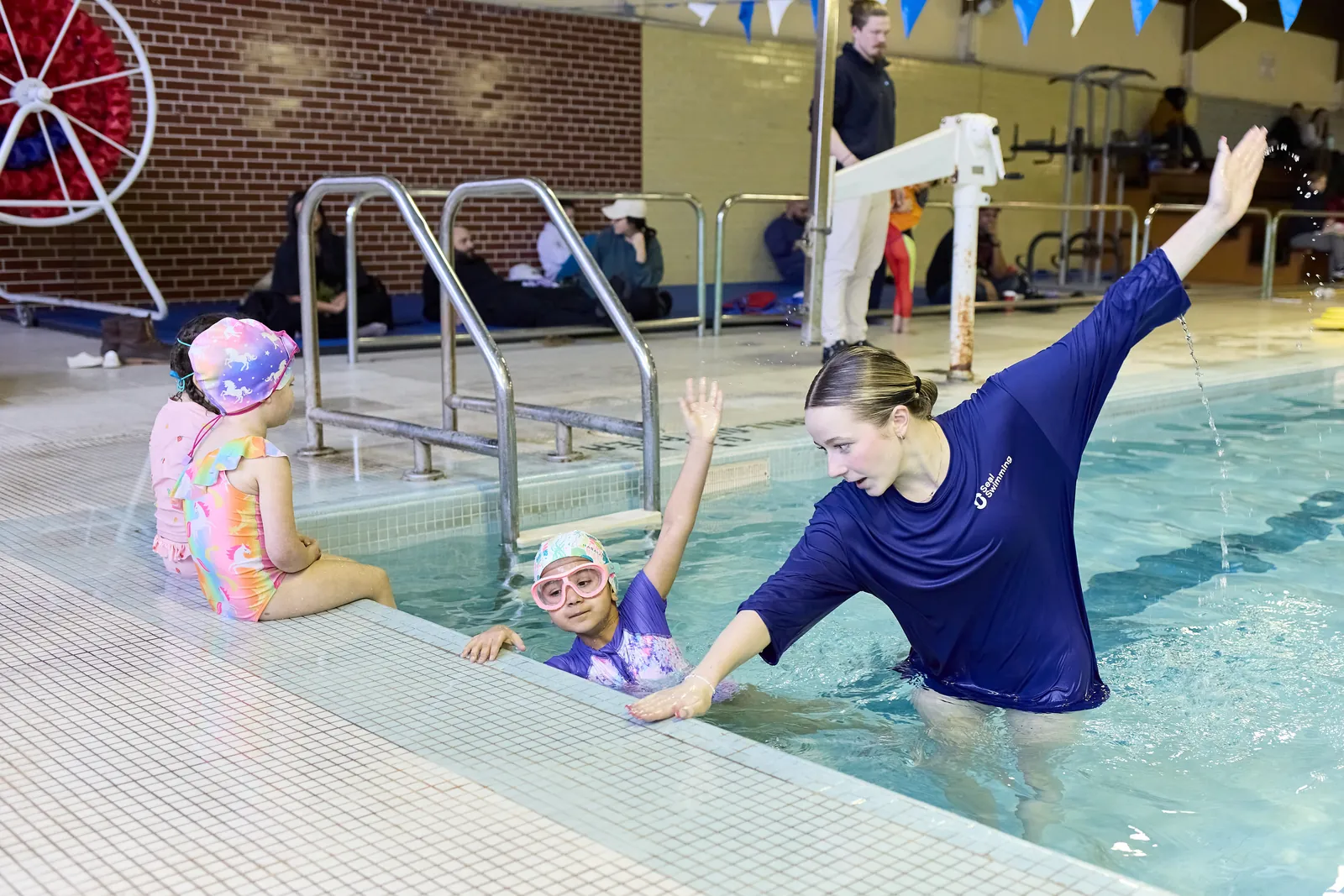
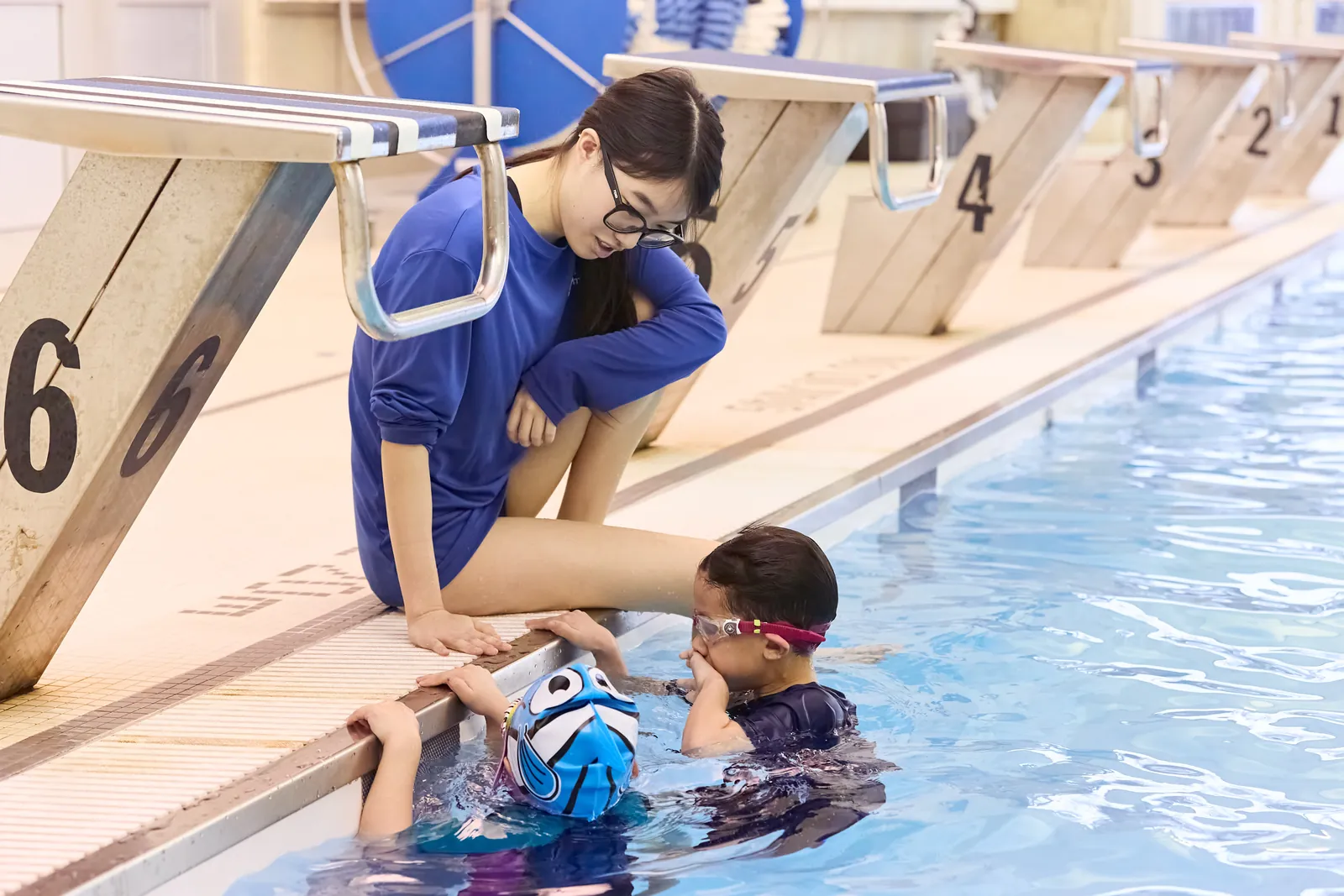
That last part matters. Your teen will not simply sit through theory and write a test. They will plan lessons, teach their peers and get structured feedback against the same rubric all the way through the course. For a closer look at the skills involved, read how a swim teacher course turns swimming skills into a career.
How the certification works
To earn the Swim Teacher Pro certification, candidates attend every session, pass a practical swim screening on Day 1, complete their homework and lesson plans, and pass a final practical evaluation where they teach a complete lesson. That final lesson is assessed on safety and supervision, communication, teaching method, technical knowledge, lesson flow, class management and swimmer assessment.
Candidates who also want the Lifesaving Society Swim Instructor award can ask us about it when they register.
How old does your teen need to be, and are they ready?
Two things decide this, and only one of them is about swimming.
The prerequisites
To enrol in Swim Teacher Pro, your teen needs to:
Be 15 or older
Hold a current Bronze Cross, Assistant Lifeguard or equivalent certification
Hold a current Standard First Aid with CPR-C certificate
If your teen has not reached Bronze Cross yet, that is the step to book first, usually after Bronze Medallion. Both run through our lifeguarding courses.
Your teen also needs to be competent in the water. On Day 1 they complete a swim screening: freestyle, backstroke, breaststroke and butterfly, plus a 400-metre continuous swim that is not timed. They do not need to be a competitive swimmer, but they do need strokes clean enough for other people to learn from.
The maturity question
This is the one worth thinking about carefully. Teaching swimming to young children asks for a specific kind of steadiness. Your teen will be responsible for a group of five-year-olds in a pool, some of whom are frightened, some of whom will not stop talking, and one of whom will need to use the washroom mid-lesson.
Good candidates tend to share a few traits:
They are patient with younger kids and enjoy being around them
They can hold their nerve when something goes sideways
They take correction well, since the course involves being watched and coached constantly
They show up on time, reliably, without being reminded
A teen who ticks those boxes usually does well, even if they are shy. Teaching gives quiet kids a clear role and a script, and many of them grow into it faster than the outgoing ones.
What your teen gains beyond the certification
Parents often frame this as a job question. It is worth widening the lens a little.
A good first job
Teaching swimming tends to pay better than much of the entry-level work open to teens in Toronto, and the shifts fit around school: evenings and weekends during the school year, longer blocks in the summer. Swim schools, community pools and camps across the GTA need qualified staff every session.
Your teen also gets something rare in a first job: real responsibility from day one, with an experienced team supervising them. At the end of Swim Teacher Pro we talk with every successful candidate about next steps and job opportunities, and our Join Our Team page lists current swim teacher roles.
Skills that outlast the pool
Teaching a nervous child to put their face in the water builds a competence that shows up later in school presentations, university interviews and every job after this one. Swim teachers learn to explain a complex physical skill in simple language, read whether someone understood, and adjust on the spot.
There is also the credibility factor. A Swim Teacher Pro certification on a résumé at 16 tells an employer that your teen completed a 40-hour professional program and passed a practical teaching evaluation.
The path after a swim teacher course
The swim teacher course is usually a first step rather than a destination. Teens who take to it often continue into other aquatic leadership training, most commonly the Lifesaving Society'sNational Lifeguard certification, which qualifies them to work on deck as a lifeguard. A teen who can both teach lessons and guard becomes very employable, since they can cover more of what a pool needs from its staff. See our lifeguarding courses for the full Bronze Medallion to National Lifeguard pathway.
Some teens teach swimming as a summer income through university. Others discover they like teaching and go into education, coaching, kinesiology or paramedicine. The swim teacher course tends to be where that interest first shows itself.
What the time commitment looks like
Swim Teacher Pro runs 40 hours over six days: four days of eight hours and two of four. Plan for a concentrated block rather than a weekly drip, and expect some reading and lesson-plan homework between sessions. Ask any provider these questions before you register:
How many hours of supervised practical teaching are included?
What is the ratio of candidates to course trainers?
Are there hiring opportunities with the provider afterward?
What happens if a candidate does not meet the standard on the first attempt?
That last question tells you a lot about a program. Strong providers have a plan for it and will say so plainly.
Train with Seal Swimming
Seal Swimming offers swimming lessons for babies, kids, teens and adults across Toronto, with small class sizes and progress you can actually see. We train our swim teachers to the same standard we teach our swimmers, and Swim Teacher Pro is how we do it.
We built the course around teaching fundamentals, clear communication and professional standards in the water, because those are the things that make a new swim teacher useful on deck in their first week rather than their third month. Whether your teen is starting out or already has some experience on a pool deck, Swim Teacher Pro gives them the tools to lead safe, engaging, well-structured lessons. Course fees are listed on our registration and fees page.