
Safety
Infant and Toddler Swimming Lessons: When to Start and What to Expect
Learn when to start infant swimming lessons Toronto parents trust, what to expect in classes, and how early swim lessons support safety and confidence.
February 6, 2026
Safety · June 16, 2025 · 9 min read
Discover the science behind water safety for toddlers and young children — from developmental readiness and drowning prevention to building water confidence. Essential reading for every parent.
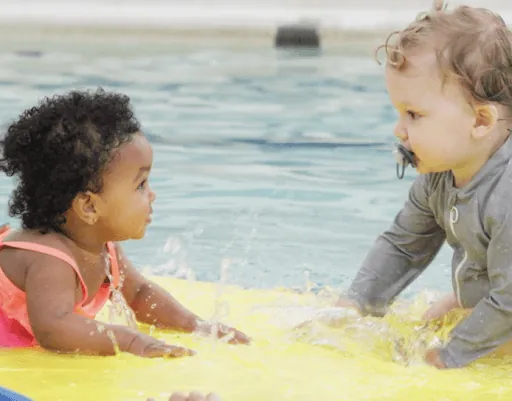
Toddlers and young children are drawn to water instinctively. It moves, splashes, reflects light, and responds to touch in ways that are endlessly fascinating to a developing mind. That same fascination is precisely why water safety education for young children is so important — and why starting early makes such a measurable difference.
This article explores the science behind water safety for toddlers and young kids: what the research says about developmental readiness, how drowning prevention works in practice, and what parents can do — both in and out of the pool — to give their children the safest possible relationship with water.
Drowning is one of the leading causes of accidental death among children in Canada. The Canadian Red Cross reports that children under five are at the highest risk of drowning — and that the vast majority of these incidents occur in supervised settings, often within seconds and without warning.
The Lifesaving Society of Ontario's annual Drowning Report consistently identifies residential pools, bathtubs, and natural bodies of water as the most common sites of child drowning incidents. What these statistics make clear is that drowning prevention for young children requires a multi-layered approach — one that combines physical barriers, active supervision, and — critically — early swimming and water safety education.
Research published in Pediatrics (the journal of the American Academy of Pediatrics) found that formal swimming lessons can reduce the risk of drowning in children aged 1–4 by up to 88%. That is not a small margin. It is one of the most compelling arguments for starting water safety education as early as possible.
Effective water safety education starts with understanding how toddlers learn. Children between 12 months and 3 years are in a period of rapid motor, cognitive, and social development — but their ability to understand and remember abstract concepts like "danger" is still very limited.
What toddlers _can_ do is build procedural memory: the kind of memory that stores physical skills and automatic responses. This is why the most important water safety skills for toddlers — floating on the back, reaching for the pool edge, kicking to move through water — are taught through repetition rather than instruction. The goal isn't for a toddler to understand why they should float; it's for floating to become an automatic response when they find themselves unexpectedly in the water.
At Seal Swimming, our Baby Seal and Seal Pups programs are structured around this developmental reality. Every activity is designed to be age-appropriate, repetitive, and rooted in positive association — so that water safety skills are encoded as natural, comfortable movements rather than frightening emergency procedures.
Before a child can develop water safety skills, they need water confidence — a basic comfort with the aquatic environment that allows learning to happen. Fear and anxiety activate the brain's threat response, which actively suppresses the kind of open, curious engagement that skill acquisition requires. A frightened toddler cannot learn to float.
Building water confidence is therefore not a "nice to have" in early swim education — it's a prerequisite. Our swim teachers use a gradual familiarisation approach that progresses through predictable stages:
Each stage builds on the last. Progress is celebrated, never rushed. And because every child develops at their own pace, our swim teachers are trained to read each swimmer's comfort level and adjust accordingly.
For children who arrive with existing water anxiety, read our guide on overcoming fear of water for strategies that support nervous swimmers of all ages.
Parent-and-child swimming classes are not just a format preference — they're developmentally essential for very young swimmers. Toddlers regulate their emotional states through co-regulation with trusted caregivers. When a child is uncertain or anxious in the water, a parent's calm, confident presence is the most powerful reassurance available.
In our Baby Seal and Seal Pups classes, parents and caregivers participate in the water alongside their child throughout every lesson. This serves multiple purposes:
The lessons parents learn in the pool don't stay in the pool. Understanding how to safely hold a toddler in deep water, knowing when to end a session because a child is getting cold or tired, and being able to model calm confidence around water — these are skills that protect children every time they're near water, not just during lessons.
Water safety experts use what's sometimes called the "layers of protection" model to describe effective drowning prevention. No single measure is sufficient on its own — but multiple overlapping layers create a system where a failure in one layer is caught by another.
For toddlers and young children, these layers include:
The most critical layer. "Water watcher" supervision means one designated adult whose sole responsibility is watching children in or near water — no phone, no conversation, no distraction. Drowning is silent and fast; a child can lose consciousness in as little as 60 seconds of submersion. Active supervision is the only layer that can respond in real time.
Pool fencing (at least 1.2 metres high with a self-latching gate), door alarms, pool covers, and hot tub covers all reduce unsupervised access to water. The Government of Canada's swimming safety guidelines recommend four-sided pool fencing as the single most effective structural drowning prevention measure for residential pools.
Transport Canada-approved personal flotation devices (PFDs) should be worn by young children whenever they're near open water — at the cottage, on a boat, or at the beach. Note that inflatable "swimming aids" like arm floaties are not safety devices and should not be used as substitutes for PFDs or supervision.
This is where formal swim lessons fit. Teaching children to float, reach for the edge, and move through water gives them the tools to manage an unexpected water entry — buying critical seconds for adult intervention. Our Seal Pups and Swim Stars programs focus on these foundational safety skills from the very first lesson.
Parents and caregivers of young children should hold current CPR certification. The Canadian Red Cross offers CPR courses for the general public. In a drowning emergency, bystander CPR before emergency services arrive is one of the most significant factors in survival outcomes.
The specific skills we focus on in our toddler programs are chosen for their direct safety value. These aren't just swimming fundamentals — they're survival skills:
These skills are taught through games, songs, and repetition — not through instruction. The goal is to make these responses automatic and associated with positive feelings, so they're available even in a moment of panic.
The benefits of early water safety education extend well beyond the pool. Research consistently shows that children who participate in structured aquatic programs during the toddler years show measurable advantages in motor development, coordination, and cognitive function.
A landmark study by Griffith University's Institute for Educational Research followed over 7,000 children aged 0–5 and found that those who participated in early swimming lessons were significantly ahead of their non-swimming peers in cognitive development, physical development, and social skills — with the advantages persisting through early primary school.
Swimming also supports physical literacy — the foundational movement skills that underpin participation in all physical activities throughout life. Read our post on the role of swimming in physical literacy development for a deeper look at this connection.
The physical environment of a swim lesson matters enormously for young children. Toddlers are sensitive to temperature, noise, and sensory overwhelm — all of which can amplify anxiety and inhibit learning.
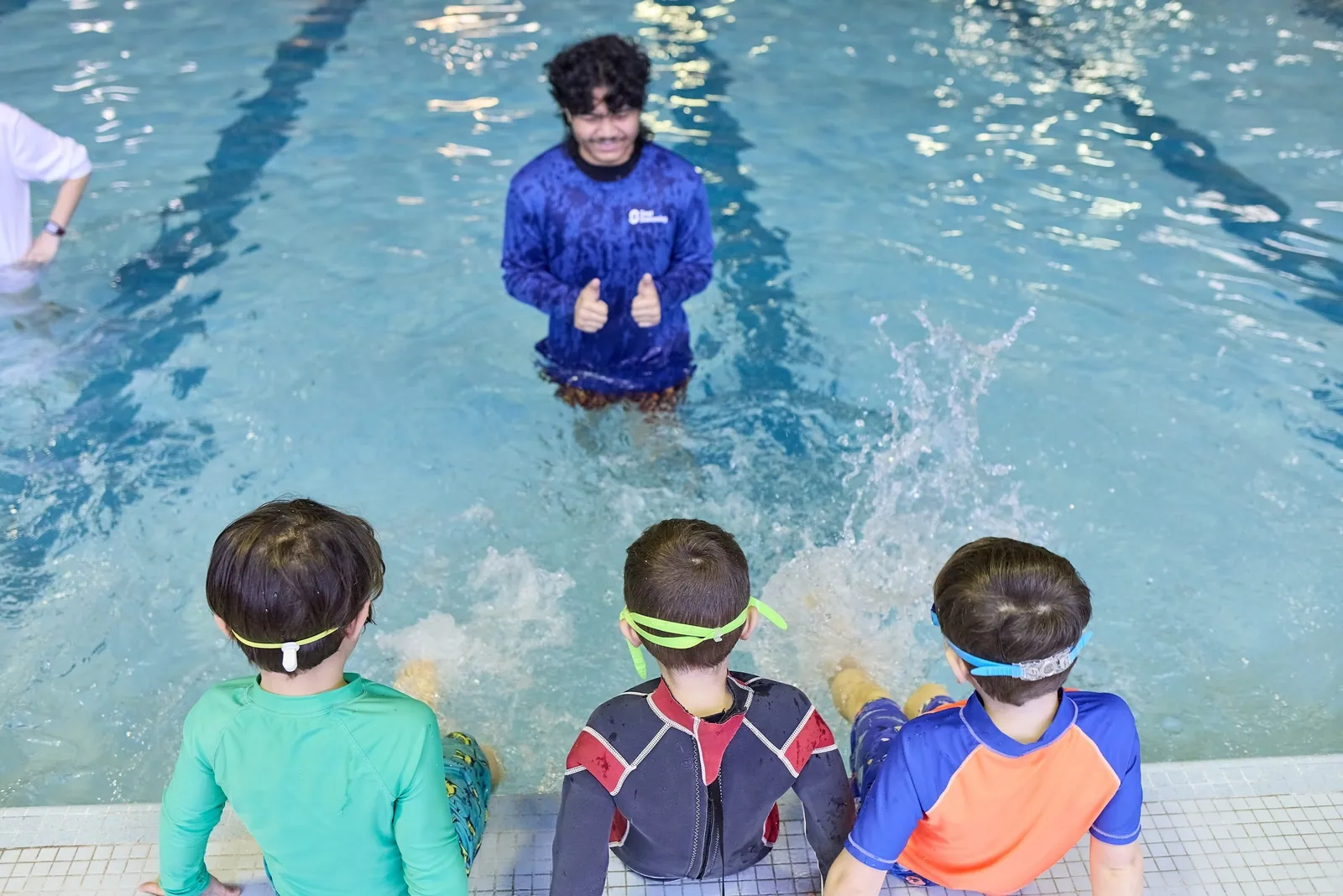
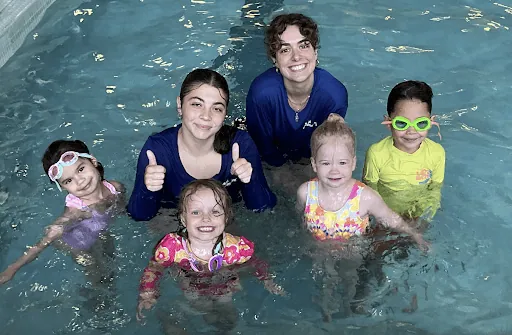
At Seal Swimming, our teaching pools across Toronto and North York are maintained at warm temperatures specifically to support the comfort of young swimmers. Our small class sizes — typically 4–6 children per swim teacher for toddler classes — ensure that every child receives individual attention and that the pool environment stays calm and manageable.
Our swim teachers hold current certifications in both aquatic instruction and first aid, and our pools are equipped with the safety infrastructure required for teaching young children. When you bring your toddler to Seal Swimming, you're bringing them to an environment designed from the ground up for their safety and success.
The lessons learned in the pool are most effective when they're reinforced consistently outside of lessons. Our Home Practice Recommendations guide includes age-appropriate activities families can do between lessons to reinforce water comfort and safety habits — including bathtub bubble blowing, water pouring games, and poolside safety rule practice.
Beyond practice, the most important thing parents can do at home is model and enforce consistent water safety rules:
Children who hear and practise these rules consistently — not just in lessons but at home, at the cottage, and at the beach — internalize them far more effectively than those who encounter them only in a formal lesson context.
Water safety is one of the most important gifts you can give a young child. The skills, confidence, and habits built in early swim lessons don't just protect children in the pool — they protect them for life, in every aquatic environment they'll ever encounter.
At Seal Swimming, we offer programs for children from 6 months through to the teenage years, with a progressive pathway that grows with your swimmer:
Not sure where to start? Take our free Swim Assessment for a personalised recommendation, or reach out to our team with any questions. With locations across Toronto and North York, there's a Seal Swimming pool near you.
Register today and give your child the water safety foundation that will protect them for a lifetime.
Safety
Learn when to start infant swimming lessons Toronto parents trust, what to expect in classes, and how early swim lessons support safety and confidence.
February 6, 2026
Safety
Looking for the best swimming lessons Toronto has to offer? Learn how to choose a swim school that prioritizes safety, confidence, and real progress for kids.
January 24, 2026
Safety
Discover how kids swimming lessons Toronto families trust help children build confidence, independence, and water safety skills in a fun, supportive swim school.
January 19, 2026
Lifeguards, assistant lifeguards and swim teachers on every shift, with one team leader per deck and Water Safety Standards taught at every level.
Read our safety protocolsAnswer a few questions and we will point you to the right program, level and pool.


