If you've ever watched your toddler grip the pool wall with white knuckles and wondered whether swimming lessons are actually working — you're not alone. Progress in the water looks different from progress in other areas of early childhood development. There's no test score, no reading level, no clearly visible milestone. There's just a small child and the water, and a relationship between the two that takes time, patience, and the right approach to build.
This guide explains what real progress actually looks like in toddler swimming lessons in Toronto — from the very first class to the moment your child moves through the water with independence and genuine confidence.
Why Toddlers Learn Swimming Differently
Toddlers — typically children between the ages of 1 and 3 — are not small versions of older children when it comes to water. Their bodies, brains, and emotional regulation are all at fundamentally different stages of development. This matters because it shapes everything about how effective swimming instruction works at this age.
Key developmental factors that influence toddler swimming progress:
- Balance and buoyancy — Toddlers have proportionally larger heads relative to their bodies, which affects how they float and orient in water
- Breath control — Deliberately controlling breathing is a learned skill that takes many exposures before it becomes automatic
- Emotional regulation — A toddler who feels uncertain in the water is not being difficult; they are responding to a genuinely unfamiliar and unpredictable environment
- Motor coordination — The fine and gross motor skills needed for efficient swimming are still developing throughout early childhood
Understanding these factors helps parents set realistic expectations — and recognise progress when it happens, even when it doesn't look like what they imagined.
Stage One: Water Familiarisation (First Classes)
In the first several sessions of Baby Seal or Seal Pups, the primary goal is not swimming. It is familiarisation — helping your child experience the water as a safe, predictable, and enjoyable environment.
What real progress looks like at this stage:
- Your child stops crying or protesting before entering the pool
- They allow their body to be moved through the water without stiffening
- They make eye contact with the swim teacher or smile during activities
- They begin to anticipate familiar parts of the routine (songs, games, specific movements)
- They splash, kick, or engage with water toys without prompting
None of these look like "swimming" — but every single one of them is meaningful progress. The Canadian Red Cross emphasises that water familiarisation is a foundational stage that cannot be skipped, and that rushing past it creates anxiety rather than confidence.
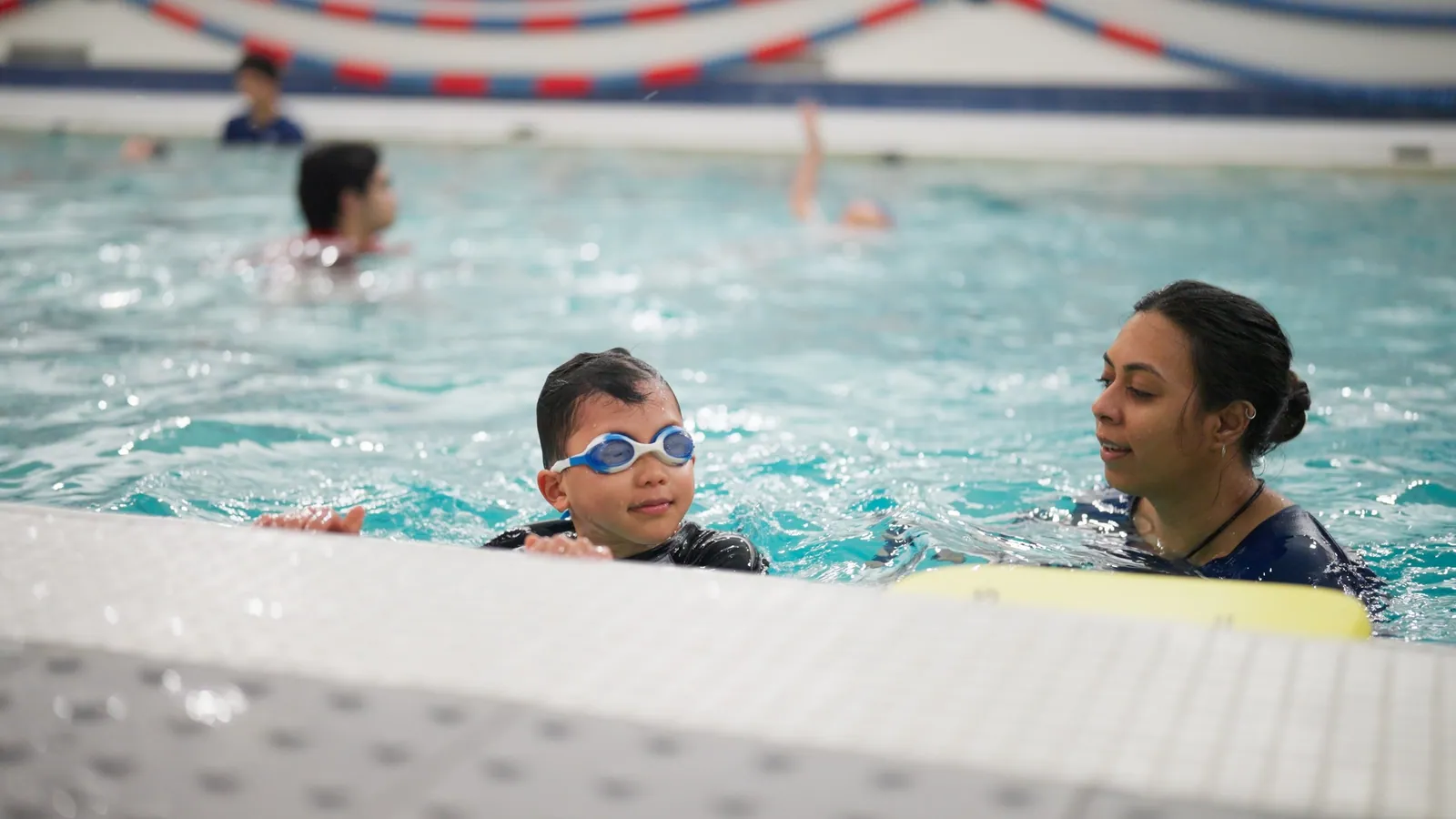
For parents in the water during Baby Seal classes, your role matters enormously here. Children take emotional cues from their caregivers. A calm, relaxed, encouraging parent signals to their toddler that the pool is safe. Even if you're nervous yourself, projecting calm makes a measurable difference to your child's experience.
Stage Two: Breath Control and Submersion
Once a toddler is comfortable in the water environment, the next major milestone is voluntary breath control — and specifically, the ability to submerge their face or go fully underwater without panic.
This stage is often the one parents find hardest to watch. Seeing your toddler briefly go underwater can feel alarming, even when it's happening safely, intentionally, and with a qualified swim teacher right there. Understanding why it matters helps.
Controlled submersion teaches toddlers:
- That going underwater does not mean something bad is happening
- That they can hold their breath voluntarily (and eventually, exhale through their nose to prevent water entering)
- That they can recover from unexpected submersion calmly — a genuine water safety skill
What progress looks like at this stage:
- Your child blows bubbles into the water on cue
- They allow their face to be wet without distress
- They close their mouth and hold breath when prompted
- They go fully underwater with the swim teacher and surface calm and smiling
- They begin initiating submersion themselves during play
According to the Lifesaving Society of Ontario, drowning is one of the leading causes of accidental death in Canadian children under five. Early breath control and submersion experience is a direct, practical safety skill — not just a swimming milestone.
Stage Three: Floating and Body Position
Floating is one of the most important skills in the water, and also one of the most counterintuitive for toddlers to learn. Children who tense their bodies sink; children who relax float. Teaching a toddler to trust the water enough to relax into a back float is a genuine achievement.
Front floats typically come first, supported by the swim teacher and then progressively less so. Back floats tend to be more challenging emotionally — being on your back in water requires a significant degree of trust and body awareness.
What progress looks like at this stage:
- Your child holds a front float position for increasing lengths of time
- They allow the swim teacher to reduce support gradually without panicking
- They achieve a back float with support, then with fingertip contact, then briefly independently
- They understand the concept of "star shape" or "big body" — the relaxed, spread position that aids buoyancy
This is also when you'll start to see the beginning of kicking — initially disorganised and splashy, then gradually more deliberate and productive as the neural pathways that coordinate the movement are strengthened through repetition.
Stage Four: Independent Movement Through Water
This is the stage most parents picture when they think of swimming progress — and it's the one that often arrives more gradually than expected, precisely because all the earlier stages were necessary preparation for it.
Independent movement in toddlers typically develops as:
- Short distances with swim teacher support close by
- Movement to the wall or step (an important safety skill)
- Gliding with arms extended from a push-off
- Combining kick and arm movements, even if uncoordinated at first
- Longer distances, with increasing control over direction and speed
What real progress looks like:
- Your child jumps from the side and returns to the wall independently
- They kick toward a target (toy, step, parent) without prompting
- They propel themselves even short distances without swim teacher contact
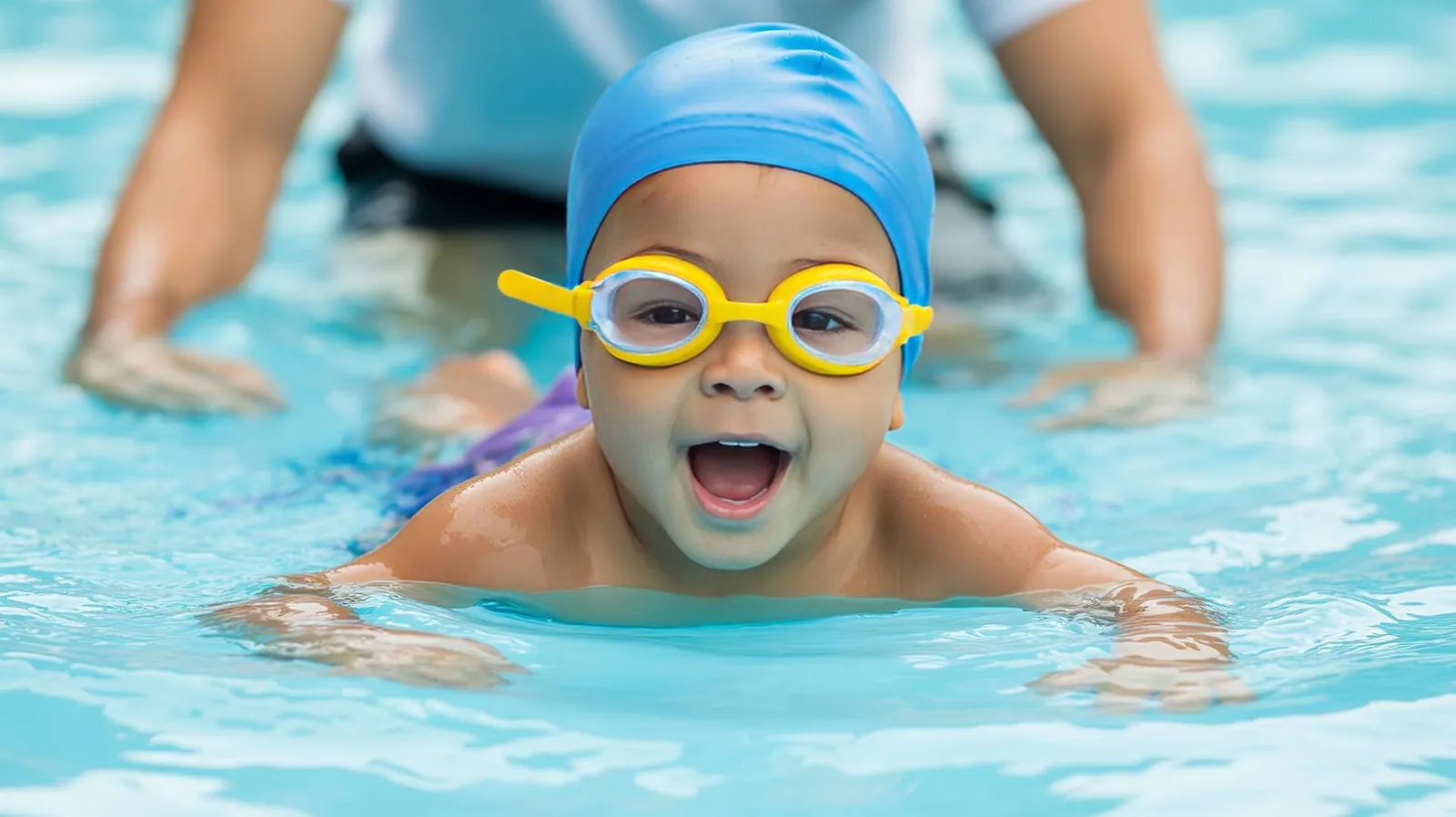
- They express pride or excitement about what they've accomplished — a sure sign that confidence is developing alongside skill
The progression from the wall-to-wall jump to a full freestyle stroke can take a season or two, depending on the child's starting point, frequency of lessons, and individual development. This is completely normal. Our Swim Stars (3–5) curriculum is designed with exactly this progression in mind, with nine levels that give children credit for each concrete skill as they develop it.
What "Slow Progress" Usually Means (and Why It's Usually Fine)
Parents sometimes worry when their toddler seems to plateau — attending lessons week after week without visible new milestones. A few important things to understand:
Consolidation is progress. Before a child can move to the next skill, they need to truly own the current one. A week where nothing new was introduced may have been a week where existing skills became automatic rather than effortful.
Water confidence is cumulative. A child who is slightly more relaxed in the water than they were last month is making meaningful progress, even if they haven't reached a new technical skill. That relaxation is what makes the next skill possible.
Some toddlers need more time in early stages. A child who had a frightening water experience, who has sensory sensitivities, or who simply has a cautious temperament may need significantly more time in the familiarisation and breath control stages. This is not a problem to be fixed — it is information about how to teach this particular child effectively.
Our swim teachers at Seal Swimming are trained to meet children where they are, not where a curriculum assumes they should be. If your child's progress looks different from what you expected, speak with your swim teacher — they'll give you an honest assessment and a clear sense of what the next steps look like.
The Role of Frequency in Toddler Progress
One of the most consistent findings in child development research is that frequency of exposure matters at least as much as the quality of individual sessions. A toddler who swims once a week will generally progress faster than one who swims once a month — not because the swim teacher is better or the program is different, but because regular exposure builds and reinforces neural pathways more effectively.
This is why we recommend continuous enrolment rather than one-off sessions. Toddlers especially benefit from the routine of regular lessons — the familiar pool, the familiar swim teacher, and the gradual accumulation of confidence that comes from consistent positive experiences in the water.
If you're wondering whether your child is in the right program, or if you're not sure where to start, our free Swim Assessment takes just a few minutes and gives you a personalised recommendation based on your child's age and current experience level.
How Parents Can Support Progress Outside of Lessons
Swim Teachers teach children in the pool. Parents have the opportunity to reinforce and support that learning everywhere else. A few evidence-based ways to support your toddler's progress:
- Talk positively about swimming. Before and after lessons, frame the pool as an exciting, positive place — not a challenging one to overcome
- Practice in the bath. Pouring water over your toddler's head, encouraging face-washing, and blowing bubbles in a warm bath all build the same skills practiced in lessons
- Use pools between lessons. Recreational pool time between lessons, where your child can play freely in the water, reinforces familiarity and joy
- Avoid overriding swim teacher guidance. If your child's swim teacher is working on letting go of the wall and you hold them at the wall every time, you're working against the lesson — even if it feels supportive
- Celebrate effort, not outcome. "I noticed you tried blowing bubbles today — that was really brave" is more useful feedback than "Why didn't you jump in like the other kids?"
When Is a Toddler "Ready" for the Next Level?
Level progressions in toddler swimming are not automatic. At Seal Swimming, swim teachers assess each child's mastery of specific skills before recommending a level change. The criteria are clear and consistent, and parents are kept informed at key points in the session.
Generally, a toddler is ready to progress when they:
- Demonstrate the target skills consistently, not just occasionally
- Can perform those skills with reduced support from the swim teacher
- Are emotionally ready for the new challenges the next level introduces
Emotional readiness matters as much as technical readiness. A child who can technically float but dissolves into anxiety at the prospect of the swim teacher letting go is not ready to move on from supported floating — regardless of what the skill checklist says. Pushing ahead prematurely almost always causes setbacks.
Choosing the Right Program in Toronto
Toronto has many swim lesson options, and the right one for your toddler depends on several factors: age, temperament, previous water experience, and your scheduling needs.
At Seal Swimming, we offer dedicated toddler programs at pools across the GTA:
- Baby Seal — For children aged 2 months to 3 years, in the water with a parent or caregiver. Focused on water confidence, early breath control, and making the pool a joyful place
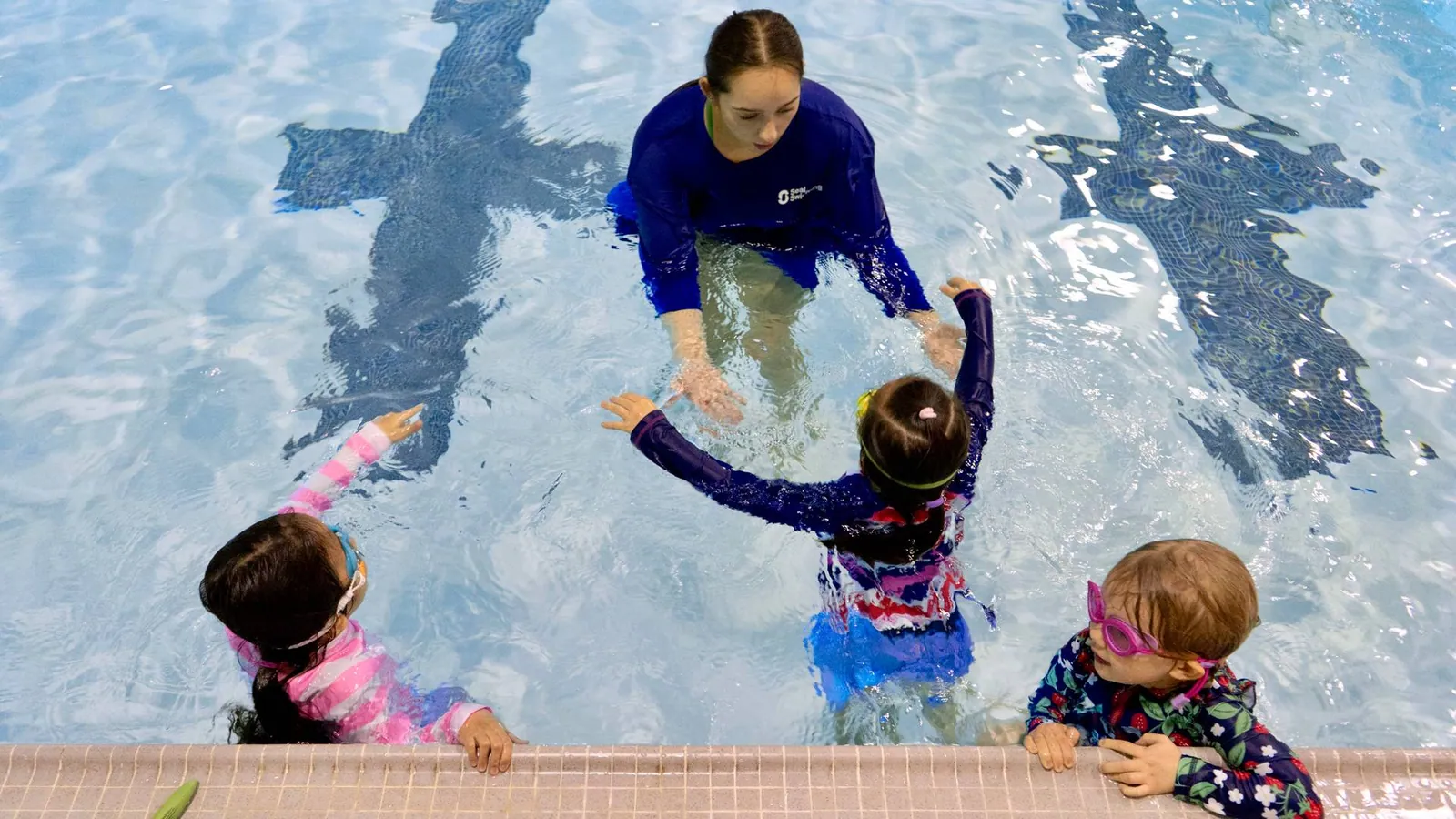
- Seal Pups — For children aged 2–4 who are ready to begin developing independence with swim teacher-led small group instruction
Both programs run at our pool locations across North York, Scarborough, West Scarborough, and Guildwood. Class sizes are small — typically 4–6 children — so swim teachers can give every swimmer genuine individual attention.
All swim teachers hold current certifications from the Lifesaving Society of Ontario and maintain First Aid and CPR-C qualifications. Many are working toward or have completed Bronze Cross and National Lifeguard qualifications.
What Progress Really Looks Like — a Summary
Real progress in toddler swimming is not linear, and it is rarely dramatic. It looks like:
- A child who used to cry at the door of the pool now walking in confidently
- A child who refused to put their face in the water blowing bubbles with delight
- A child who clung to the swim teacher kicking independently toward the step
- A child who was terrified of the deep end splashing in with a grin
These moments don't happen on a schedule. But they do happen — reliably, consistently, and in ways that last a lifetime — when children receive patient, qualified instruction in a safe and supportive environment.
If your toddler is ready to start that journey, we'd love to be part of it. Use our Swim Assessment to find the right program, or register directly for your nearest location. You can also browse our FAQ for answers to common questions about what to expect.
Have questions? Reach us at hello@sealswimming.ca or (416) 539-6807 539-6807). We're happy to help you find the best fit for your child.