The Lifesaving Society's Bronze Medallion is one of the most recognized aquatic certifications in Canada — and for good reason. It's the gateway to a lifeguarding career, a powerful confidence-builder, and a course that teaches skills that genuinely save lives. Whether you're a parent helping your teenager plan their next step, or someone ready to pursue lifeguarding yourself, this guide covers everything you need to know before you start.
The Bronze Medallion is a Lifesaving Society certification that focuses on water rescue, survival swimming, CPR, and the foundational principles of lifesaving. It's the first formal step in the lifeguard certification pathway and is recognized by aquatic facilities, summer camps, and recreation centres across Canada.
The course is built around the Lifesaving Society's 4-Point Rescue System — a structured approach to assessing and responding to aquatic emergencies that forms the backbone of professional lifeguarding in Canada. Participants learn not just how to rescue, but how to think like a lifesaver: reading environments, anticipating risk, and making fast, effective decisions under pressure.
Who Can Enrol?
The Bronze Medallion is open to participants who are:
- 13 years of age or older on or before the last day of the course
- Strong, confident swimmers — you don't need to be competitive, but you should be comfortable swimming continuously for extended distances
- Holders of the Bronze Star certification (or equivalent), which confirms the swimming fitness baseline required for the course
If your child has been progressing through our Swim Stars program and is ready for the next challenge, the Bronze Medallion is a natural and rewarding next step. Our Swim Squads program is also excellent preparation — building the endurance, stroke efficiency, and water confidence that make Bronze Medallion training significantly easier.
Not sure if your swimmer is ready? Reach out to our team and we'll help you assess their readiness and plan the right pathway.
The Bronze Medallion sits within a clear, progressive certification ladder:
- Bronze Star — Entry-level lifesaving for ages 11+. Focuses on personal survival, basic rescues, and fitness.
- Bronze Medallion — Ages 13+. Rescue techniques, CPR-B, survival swimming, and lifesaving principles.
- Bronze Cross — Ages 15+. Advanced rescue, spinal injury management, first aid, and lifeguard readiness.
- National Lifeguard (NL) — The professional standard for lifeguard employment at pools, waterfronts, and waterparks across Canada.
Each certification builds directly on the last. Completing the Bronze Medallion is a prerequisite for the Bronze Cross, which is in turn required for the National Lifeguard certification. View all of our current Lifeguarding & Leadership courses to see the full pathway we offer at Seal Swimming.
What You'll Learn: Course Content in Detail
Water Rescue Techniques
The heart of the Bronze Medallion is learning to execute safe, effective rescues across a range of scenarios. Participants learn and practise:
- Reaching and throwing assists — using equipment to rescue a distressed swimmer without entering the water
- Wading rescues — entering shallow water to assist a victim safely
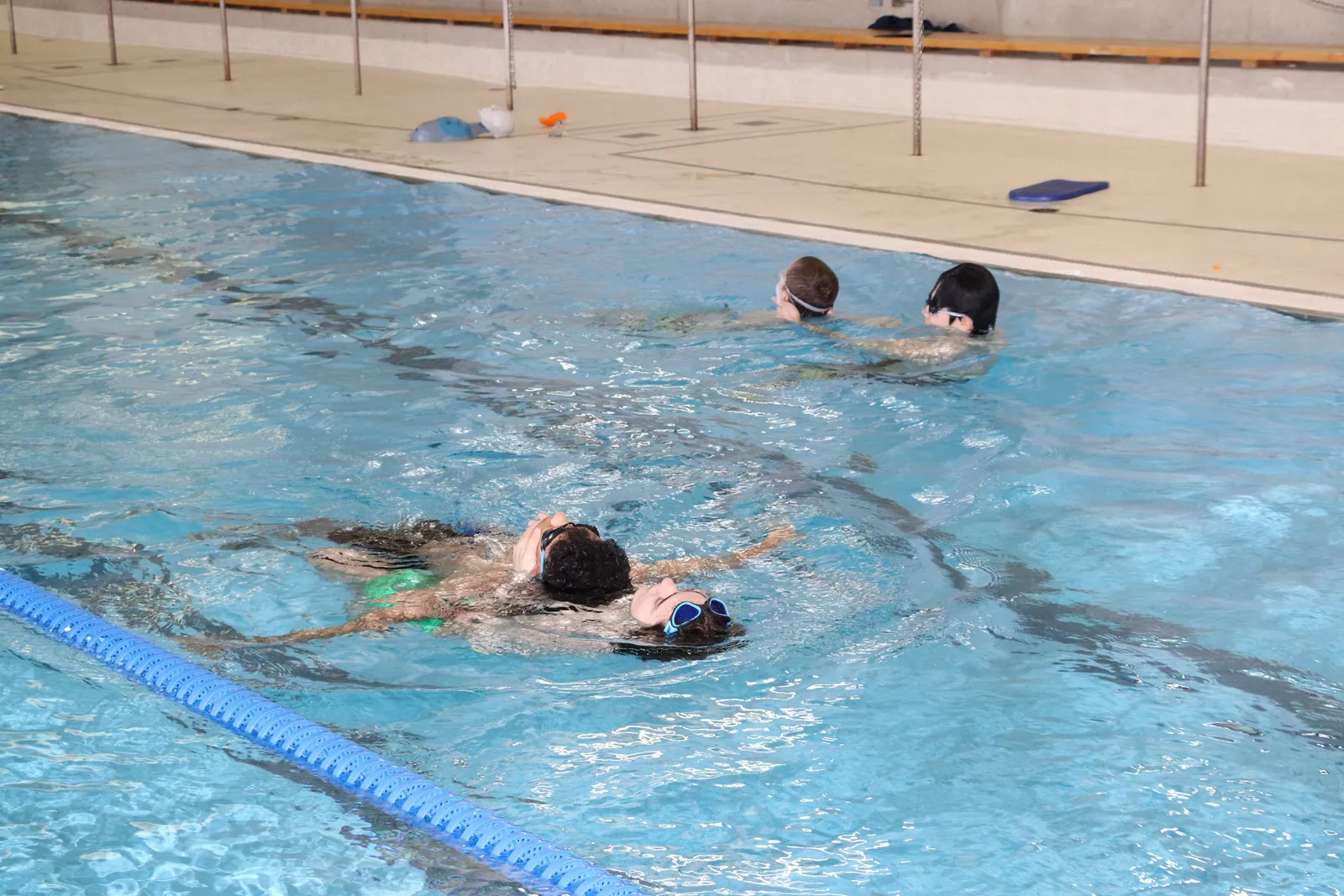
- Swimming rescues — approaching, contacting, and towing a distressed swimmer to safety
- Tired swimmer and non-swimmer carries — transporting victims efficiently while maintaining control
- Defence and release techniques — how to safely break free if a panicking victim grabs hold
All rescue techniques are taught within the 4-Point Rescue System framework: _Recognize, Respond, Rescue, Recover_. This systematic approach ensures participants can apply their skills calmly and effectively in real emergencies.
CPR-B and Emergency Response
Participants receive hands-on training in CPR-B (cardiopulmonary resuscitation for adults and children) as well as the fundamentals of emergency response in aquatic settings. This includes:
- Recognizing cardiac arrest and respiratory emergencies
- Performing chest compressions and rescue breaths
- Using an AED (Automated External Defibrillator)
- Managing unconscious victims at the poolside
The Canadian Red Cross estimates that bystander CPR can double or triple a cardiac arrest victim's chance of survival. The skills learned in this section of the course are genuinely life-saving — not just in aquatic settings, but anywhere.
Survival Swimming
Survival swimming develops the endurance, technique, and mental resilience to stay safe in unexpected aquatic situations. Participants practise:
- Treading water and survival floating for extended periods
- Swimming in clothing (to simulate real-world emergency conditions)
- Heat Escape Lessening Position (HELP) and Huddle techniques
- Long-distance swimming with efficiency and controlled breathing
Swimmer Assessment and Risk Management
A key component of the Bronze Medallion is learning to _see_ what others miss. Participants develop the ability to:
- Identify swimmers in distress before an emergency escalates
- Assess aquatic environments for hazards and risks
- Apply accident prevention principles in real-world settings
- Understand the responsibilities and limitations of a lifesaver
According to the Lifesaving Society's Ontario Drowning Report, the vast majority of drowning incidents are preventable. The risk management skills taught in the Bronze Medallion are designed to interrupt that chain of events before a rescue is ever needed.
Course Structure and Format
The Bronze Medallion combines in-pool skill sessions with classroom or poolside theory instruction. At Seal Swimming, courses are structured to balance both components effectively:
- In-pool sessions — rescue technique practice, survival swimming drills, and scenario-based training
- Theory sessions — the principles of lifesaving, risk management, CPR theory, and emergency protocols
- Integrated scenarios — simulated emergencies that bring all skills together under realistic conditions
Our small class sizes mean every participant gets direct feedback from our experienced swim teachers throughout the course — not just at the final evaluation. This is one of the key advantages of training with Seal Swimming over larger, less personal programs.
How You're Evaluated
The Bronze Medallion evaluation tests both physical skills and theoretical knowledge. Participants are assessed on:
- Execution of rescue techniques in simulated scenarios
- CPR-B performance on a manikin
- Survival swimming components (distance, clothing swim, timed elements)
- Written or oral knowledge assessment on lifesaving principles
There's no need to be nervous about the evaluation — our swim teachers prepare participants thoroughly throughout the course so that assessment day is a demonstration of skills already mastered, not a surprise test. Read our guide on how to progress through swim levels for mindset strategies that apply equally well to certification courses.
What to Bring
- A well-fitted swimsuit and a towel
- A whistle (required for practice rescue scenarios)
- Goggles
- A change of clothes (including a full set for clothing swim drills)
- A notebook and pen for theory sessions
- Water and snacks — sessions are physically demanding
- Your Bronze Star card or equivalent proof of prerequisite (if applicable)
Benefits Beyond the Certification
The Bronze Medallion is more than a credential — it's a formative experience. Participants consistently report that the course:
- Builds genuine confidence — knowing you can handle a water emergency changes how you carry yourself in and out of the pool
- Develops leadership instincts — the course trains you to act decisively when others hesitate
- Opens career doors — the Bronze Medallion is often a requirement for summer camp counsellor roles, recreation positions, and aquatic employment
- Creates community — many participants form lasting connections with fellow course members who share the same values around safety and service
For those who want to continue, the Bronze Cross and National Lifeguard certifications open the door to paid employment as a lifeguard. We also offer a Swim Teacher certification pathway for those interested in teaching as well as guarding. And if you're considering a career in aquatics, explore our Lifeguard and Aquatic Leadership Instructor positions at Seal Swimming.
Why Train at Seal Swimming?
At Seal Swimming, our lifeguarding courses are taught by certified, experienced swim teachers who care deeply about each participant's development — not just their certification outcome. We offer:
- Small class sizes for personalized instruction and more practice time per participant
- Experienced swim teachers with real-world lifeguarding and teaching backgrounds
- Multiple locations across Toronto and North York for convenient scheduling
- A progressive program pathway from beginner swim lessons all the way through to National Lifeguard certification
Whether this is your first step into the lifesaving world or you're continuing a journey that started in our Swim Stars program years ago, we're here to support you every step of the way.
Ready to Register?
The Bronze Medallion is a course that changes how participants see themselves and the water around them. It's challenging, rewarding, and genuinely important — and we'd love to be part of your journey.
View our upcoming Bronze Medallion course dates and register today to secure your spot. Have questions? Contact our team — we're always happy to help you figure out the right next step.