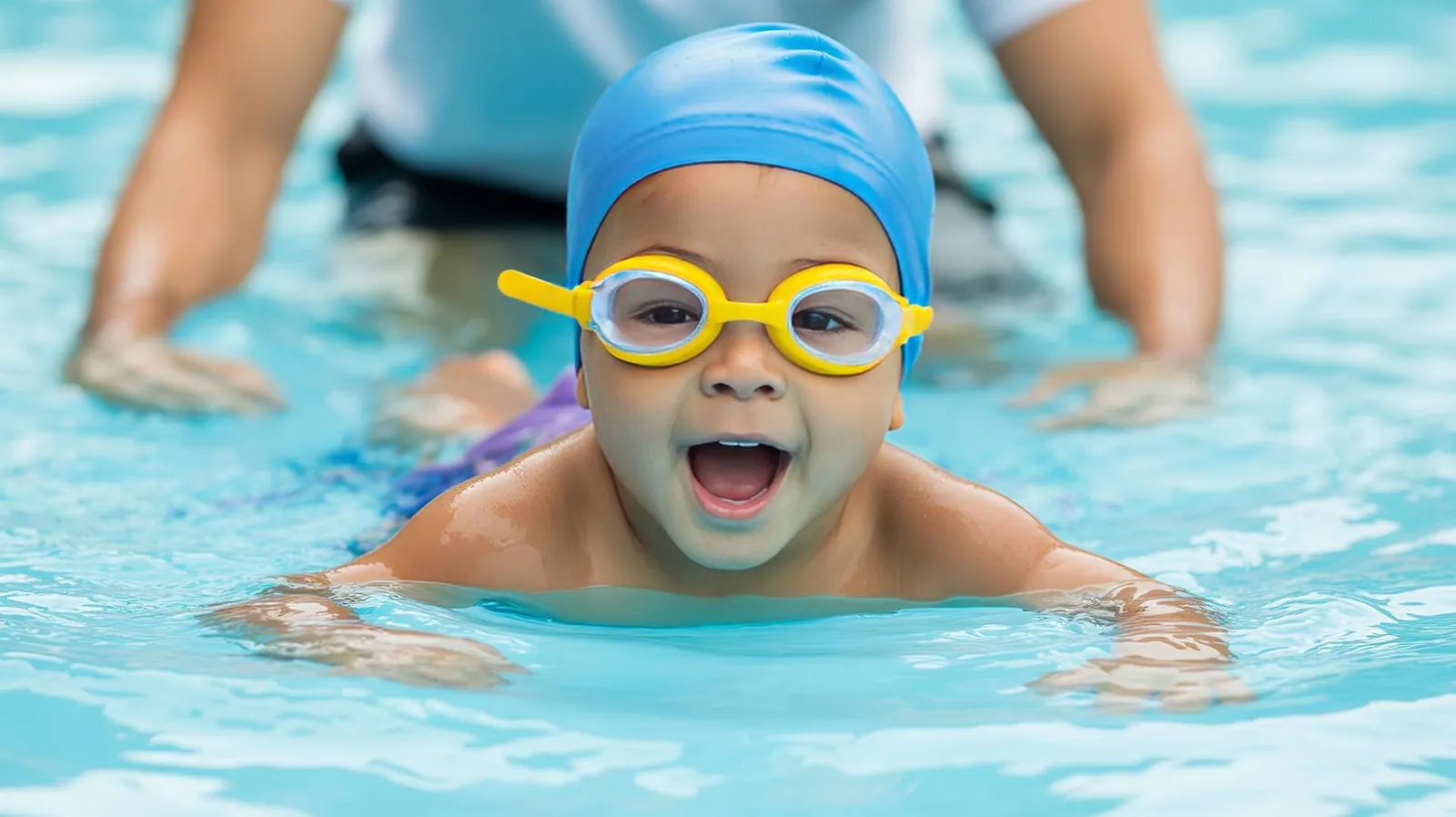
Swimming is one of the most important life skills a child can develop. It provides safety, builds physical fitness, fosters confidence, and opens doors to a lifetime of aquatic activity. But with so many programs available — from parent-and-baby classes to competitive squads to lifeguard training — choosing the right starting point for your child can feel overwhelming.
This guide will walk you through every factor worth considering, with specific recommendations for each age group and goal. By the end, you'll have a clear picture of where your child fits and what to look for in a program.
Why Starting in the Right Program Matters
Placing a child in a program that's too advanced can create anxiety and erode confidence. Placing them in one that's too easy leads to boredom and disengagement. The right program — one that matches your child's age, current ability, and temperament — creates a positive feedback loop: small successes build confidence, confidence encourages effort, effort produces progress.
Research published in Pediatrics (the journal of the American Academy of Pediatrics) found that formal swimming lessons can reduce drowning risk in children aged 1–4 by up to 88%. The earlier children start in a structured, age-appropriate program, the greater the safety benefit — and the more naturally swimming skills develop.
1. Match the Program to Your Child's Age
Age is the most fundamental starting point. Children at different developmental stages have very different needs in the water, and the best programs are designed around those differences.
Infants (6 months – 18 months): Baby Seal
For the youngest swimmers, the goal isn't stroke development — it's water familiarity, sensory exploration, and the foundation of a positive relationship with water. Our Baby Seal program is designed for infants from 6 months, with a parent or caregiver in the water throughout every lesson. Classes focus on gentle submersion, bubble blowing, back floating, and basic safety responses — all within a playful, low-pressure environment.
Read more about what to expect in parent-and-baby classes in our guide: The Joy of Parent and Baby Swimming Classes.
Toddlers and Preschoolers (18 months – 4 years): Seal Pups
As children develop more motor control and language, swim lessons can become more structured — though play and positive association remain essential. Our Seal Pups program builds on the foundations of Baby Seal, developing water confidence, independent movement, and the early safety skills that matter most for this age group: floating, kicking, and reaching for the wall.
Children (3–12 years): Swim Stars
This is the stage where children develop the full range of swimming skills — from basic water entry and breath control through to all four competitive strokes, flip turns, and open-water readiness. Our Swim Stars programs are split by age to ensure developmentally appropriate instruction:
- Swim Stars (3–5) — For younger children building independence in the water, foundational safety skills, and early stroke development
- Swim Stars (5–12) — For school-age children progressing through all four strokes, endurance, and advanced water safety
Older Children and Teens: Swim Squads and Leadership
For children who have mastered the basics and want to go further, Swim Squads offers a competitive-style training environment focused on stroke efficiency, endurance, and performance. For teens interested in leadership and career pathways, our Lifeguarding and Leadership courses — including the Lifesaving Society Bronze Medallion and Bronze Cross — are the natural next step.
2. Assess Your Child's Current Skill Level
Age provides a starting point, but skill level determines the right class within that age group. A 7-year-old who has never been in a pool has different needs from a 7-year-old who can already swim a length independently.
Here's a simple framework for assessing where your child is:
- No experience — Has not had formal lessons; may be apprehensive about water. Start at the beginning of the appropriate age group's program.
- Water familiar — Comfortable in the water, can float with support, beginning to kick independently. Likely mid-level within their age group.
- Independent swimmer — Can swim a short distance unassisted, has some stroke technique. Ready for more structured skill development.
- Proficient swimmer — Confident with multiple strokes, good endurance. May be ready for Swim Squads or leadership programs.
If you're not sure where your child fits, our free Swim Assessment provides a personalised recommendation based on your child's current abilities and goals. It takes just a few minutes and removes all the guesswork.
3. Define Your Goals
Different families come to swimming with different priorities. Being clear about your goals helps you choose a program that actually delivers what you're looking for.
Water Safety
If your primary concern is drowning prevention and safety awareness, prioritise programs that explicitly teach survival skills: floating, reaching for the edge, and safe water entry. Every Seal Swimming program includes water safety as a core component — not an afterthought. For a deeper look at the science behind early water safety education, read our article on the science of water safety for toddlers and young kids.
Physical Fitness and Development
Swimming is one of the most complete physical activities available to children. It builds cardiovascular fitness, strength, coordination, and flexibility simultaneously — without the impact stress of land-based sports. A landmark study by Griffith University found that children who participated in early swimming lessons showed measurable advantages in cognitive and physical development that persisted through early primary school.
Confidence and Enjoyment
For many children, the greatest benefit of swimming lessons isn't the strokes — it's the confidence. Mastering a physical challenge in a supportive environment builds self-belief that transfers to school, sports, and social situations. Programs that prioritise fun and positive reinforcement alongside skill development produce children who love the water — and keep coming back.
Competitive Swimming
If your child shows a love of speed and competition, our Swim Squads program provides the structured, performance-focused training environment they need to develop their potential.
Lifeguarding and Leadership
For teens who want to turn their swimming skills into a career or leadership opportunity, our Lifeguarding and Leadership pathway leads from Bronze Medallion through to the National Lifeguard certification. Read our guide on the benefits of lifeguard training for a full picture of what this pathway offers.
4. Evaluate Swim Teacher Qualifications
The quality of instruction is the single most important factor in whether a child progresses, stays engaged, and feels safe. Look for programs where swim teachers hold current certifications from recognised bodies.
In Canada, the Lifesaving Society sets the national standard for aquatic instruction certification. All Seal Swimming swim teachers hold current Lifesaving Society certifications and first aid training, and our ongoing professional development ensures that teaching methods stay current and effective.
Beyond credentials, look for swim teachers who are patient, encouraging, and genuinely responsive to individual children. The best swim teachers don't just teach strokes — they read each child's confidence level and adjust their approach accordingly. You can learn more about what our swim teachers bring to the pool in our FAQ article on swim teacher qualifications.
5. Consider Class Sizes
Class size has a direct impact on how much individual attention each child receives — and for young or nervous swimmers, individual attention can make the difference between progress and stagnation.
As a general guide:
- Infants and toddlers — 4–6 children per swim teacher is ideal. Young children need frequent direct interaction and reassurance.
- Preschool and early school age — 4–8 children per swim teacher allows for skill demonstration, individual correction, and enough practice time per child.
- Older children and teens — slightly larger groups can work if the swim teacher is experienced, but 6–10 remains optimal for skill development.
At Seal Swimming, our class sizes are kept small by design — not just because it's better for learning, but because it's better for safety. Smaller classes mean our swim teachers can always see every swimmer.
6. Prioritise Consistency and Year-Round Availability
Swimming is a skill that builds through repetition and retention. Long gaps between lessons — especially for young children — can lead to regression, particularly in water confidence. Year-round programming, or at minimum consistent session-to-session attendance, produces significantly better outcomes than sporadic participation.
At Seal Swimming, we offer year-round programming with rolling sessions, so there's no need to wait for a new term to start or to take extended breaks. The Canadian Red Cross emphasises that consistent, structured swim education — not one-off lessons — is what produces lasting water safety skills.
7. Consider Group vs. Private Lessons
Group lessons are the right choice for most children — they provide peer interaction, a social environment, and the motivating effect of watching others try and succeed. But private lessons can be valuable in specific situations:
- A child with significant water anxiety who needs extra time and attention before joining a group
- A child who wants to accelerate their progress before joining a competitive program
- A child with specific physical or developmental needs that require individualised instruction
- An adult learner who prefers a private setting
Our Private Lessons are available for swimmers of all ages and skill levels, with scheduling flexibility to suit busy families.
8. Look for a Safe, Welcoming Environment
Young children are acutely sensitive to their physical environment. Warm pool temperatures, manageable noise levels, clear poolside safety protocols, and a welcoming atmosphere all contribute to how comfortable a child feels — and how quickly they progress.
Visit the facility before enrolling if possible. Watch a class in progress. Notice how swim teachers interact with children, how the pool deck is managed, and whether the overall environment feels calm and organised. At Seal Swimming, our locations across Toronto and North York are designed to be safe, warm, and welcoming for families — from the pool deck to the changing rooms.
Quick Reference: Seal Swimming Programs by Age and Goal
| Age Group | Program | Best For |
|---|
| 6 months – 18 months | Baby Seal | Water introduction, parent bonding, early safety |
| 18 months – 4 years | Seal Pups | Water confidence, independence, foundational skills |
| 3–5 years | Swim Stars (3–5) | Early stroke development, safety skills, fun |
| 5–12 years | Swim Stars (5–12) | All four strokes, endurance, advanced safety |
| Competitive swimmers | Swim Squads | Performance, speed, stroke refinement |
| Adults | Adult Swim Training | Learning to swim, fitness, technique improvement |
| Teens 13+ | Lifeguarding Courses | Leadership, certification, career preparation |
| All ages | Private Lessons | Individual attention, anxiety, accelerated progress |
Ready to Find the Perfect Program?
Choosing the right swim program is one of the most impactful decisions you can make for your child's safety, development, and confidence. The good news is that you don't have to figure it out alone.
Take our free Swim Assessment for a personalised program recommendation, or reach out to our team — we're always happy to talk through your child's needs and help you find the right fit. With locations across Toronto and North York and year-round programming, there's a Seal Swimming class that's right for your family.
Register today and start your child's swimming journey with a program designed for exactly where they are — and where they're headed.